Surfaces That Resist Daily Wear Permanently
Ceramic Coating for Interior, Wheels and Glass in Arizona for vehicles exposed to intense UV, brake dust, and water spotting
Dashboard surfaces fade and crack under Arizona sun exposure while brake dust welds itself to wheels and hard water leaves permanent spots on glass. Motor City Auto City LLC applies ceramic coating to interior surfaces, wheels, and glass in Arizona to create a protective barrier that changes how these areas respond to contaminants. The coating bonds at a molecular level to create a hydrophobic and UV-resistant layer that prevents stains from penetrating and makes cleaning dramatically easier.
Ceramic coating provides protection that standard waxes and sprays cannot match because it forms a semi-permanent bond rather than sitting on top of surfaces. Interior applications shield leather, vinyl, and plastic from UV degradation that causes cracking and color loss. Wheel coatings prevent brake dust from bonding to the surface, which means it rinses away instead of requiring scrubbing. Glass coatings cause water to bead and sheet off, improving visibility during rain and reducing mineral deposit buildup.
Schedule a coating consultation to assess which vehicle surfaces would benefit most from ceramic protection.
How Ceramic Coating Addresses Long-Term Damage
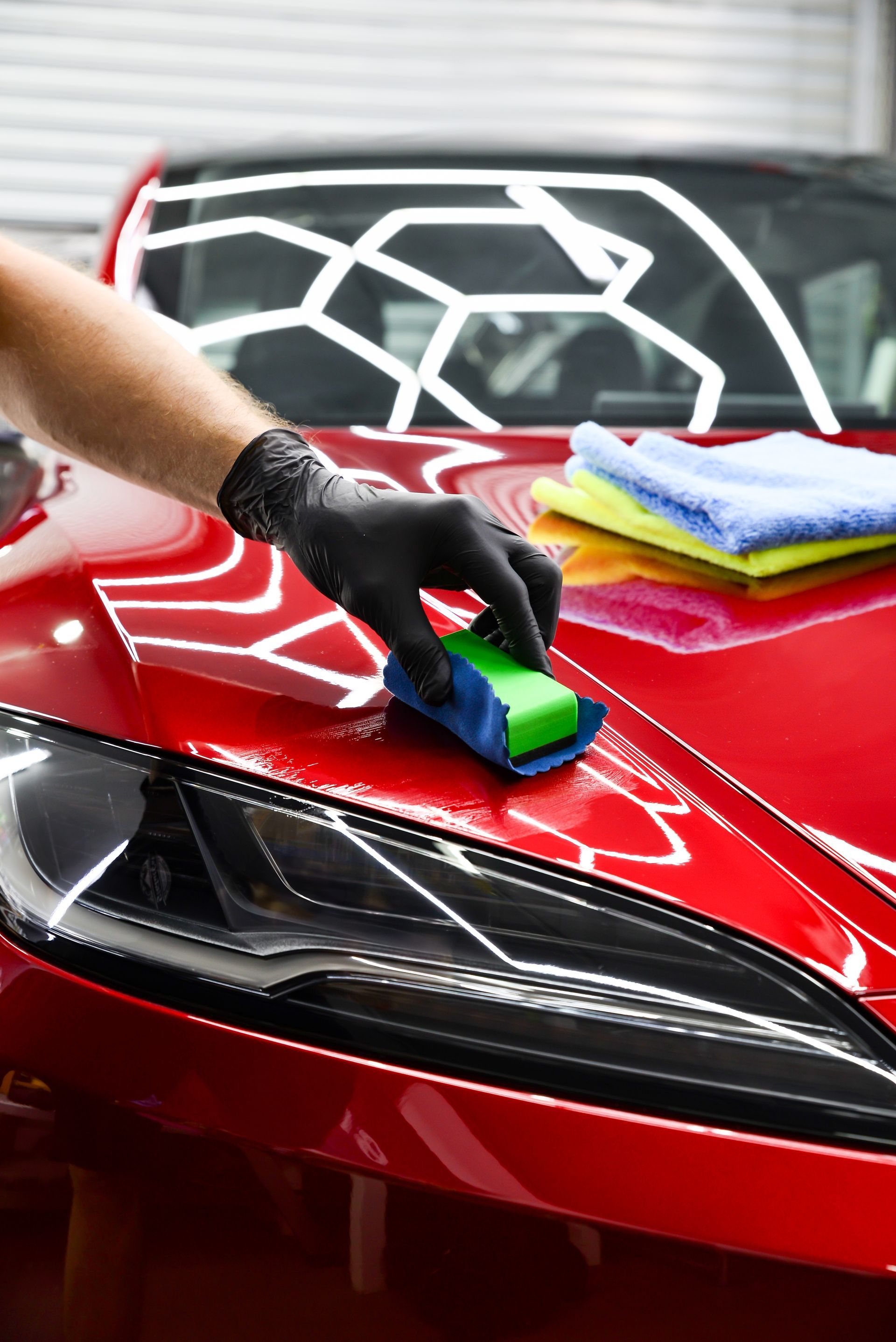
The application process involves thorough surface preparation before coating because contaminants trapped under ceramic layers become permanent. Wheels are cleaned to remove all existing brake dust and road film, glass surfaces are polished to eliminate water spots and residue, and interior surfaces are degreased so the coating bonds directly to the material. The ceramic product is applied in thin, even layers and allowed to cure, creating a hard protective shell.
Once cured, you'll notice that water beads up and rolls off glass instead of clinging and leaving spots, dirt and dust wipe off interior surfaces without cleaning products, and wheels stay cleaner between washes because brake dust doesn't embed into the finish. Surfaces maintain their appearance longer because UV rays can't penetrate to the material underneath, and stains from spills or road contaminants sit on top of the coating rather than soaking in.
Ceramic coating durability varies by surface type and exposure, with interior applications typically lasting several years and wheel coatings requiring occasional reapplication based on driving conditions and brake pad composition. The protection isn't permanent, but it significantly extends the time between deep cleaning and reduces the effort required for routine maintenance.
About Ceramic Protection Options
Vehicle owners considering ceramic coating want to understand how it performs compared to traditional protection methods and what maintenance it requires.
What makes ceramic coating different from wax or sealant?
Ceramic coating bonds chemically to surfaces and cures into a hard protective layer that lasts years rather than weeks, while waxes and sealants sit on top and wash away gradually with each cleaning.
How does the coating protect interior surfaces specifically?
It blocks UV radiation that breaks down plastics and leather, prevents liquids from soaking into porous materials like fabric and vinyl, and creates a surface that resists dust adhesion and fingerprint oils.
Why coat wheels when they get dirty anyway?
Coated wheels allow brake dust to rinse off with water pressure alone rather than requiring scrubbing, which prevents the repetitive abrasion that wears down wheel finishes over time and makes cleaning take minutes instead of extensive effort.
Does ceramic coating on glass eliminate the need for wipers?
The coating improves water shedding and visibility but doesn't replace wipers; instead, it causes water to bead and blow off at highway speeds and prevents mineral deposits from Tempe's hard water from bonding permanently to the glass surface.
How long does the application process take?
Surface preparation and coating application typically requires several hours depending on how many areas are being treated, with full curing taking 24 to 48 hours before the vehicle is exposed to water or contaminants.
Motor City Auto City LLC evaluates your vehicle's current condition to determine which surfaces would benefit most from ceramic protection based on use patterns and exposure. Arrange an application appointment to protect interior components, wheels, and glass with durable coating technology.